Free beta · v0.1.0

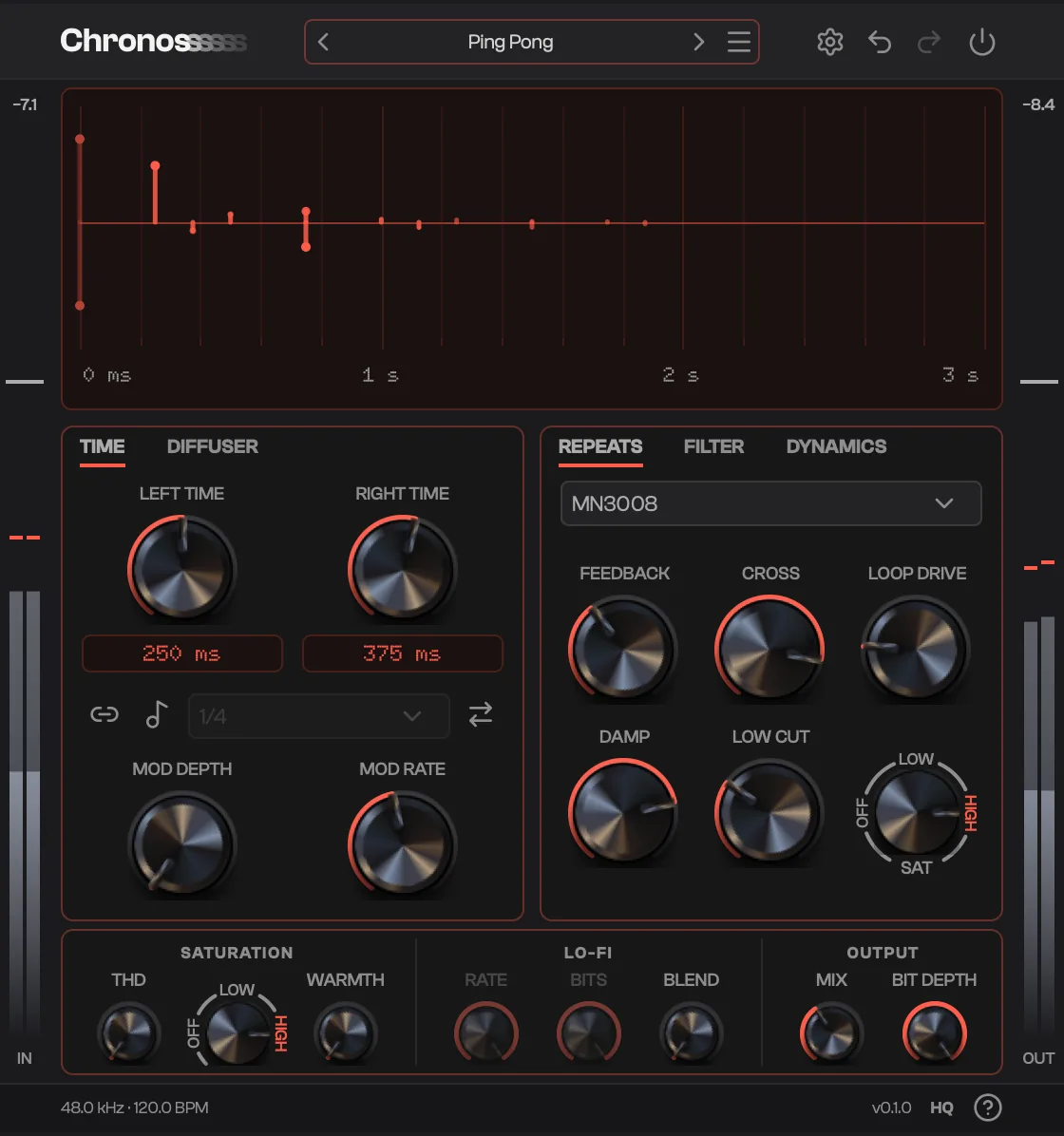
Chronos

A nonlinear stereo delay. Pick a clean Digital line or an MN3005 or MN3008 bucket-brigade emulation, then push the feedback loop from tight slapback into saturated, self-oscillating trails.

macOS · Windows · Linux  /  AU · VST3 · Standalone

Free beta · v0.1.0

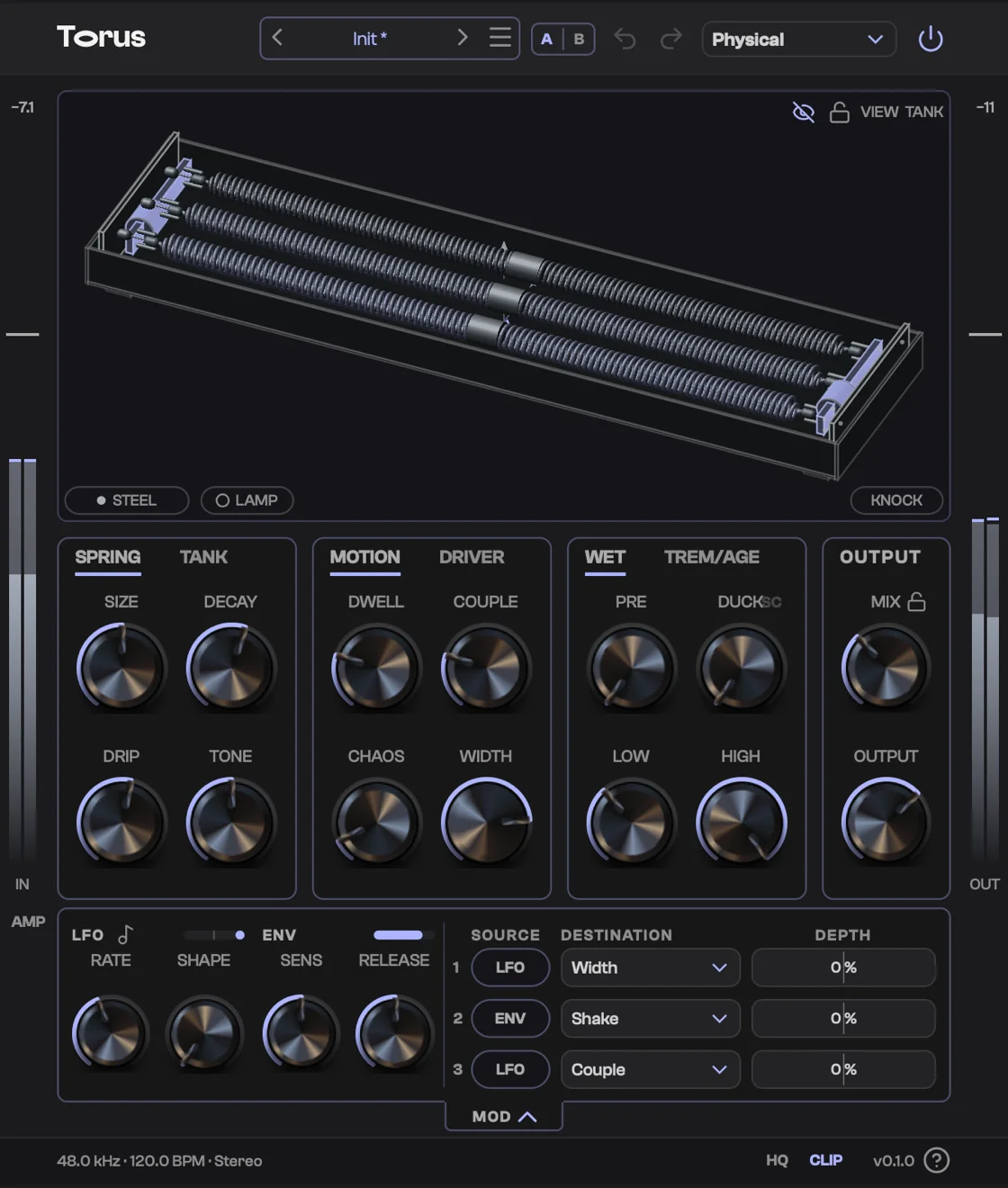
Torus

A stereo spring reverb with a parametric engine and a physical model of the spring tank, plus a three-slot modulation matrix.

macOS · Windows · Linux  /  AU · VST3 · Standalone

Trusted by hundreds of engineers

HBO Disney BET Marvel Hulu Netflix Sony

Open source · WRAY

The fast maths inside our plugins.

Header-only C++23 for audio DSP. exp, log, sin, tanh and friends, way quicker than std:: and checked against 40 digit maths.

NEON · SSE2 · scalar  /  float · double  /  GPL-2.0.

#include <wray/wray.h>

float  a = wray::exp(0.5f);
double b = wray::atan2(1.0, -2.0);

// SIMD vectors and whole buffers too
auto v = wray::tanh(wray::f32x4(0.25f));
wray::sin(input, output);

// the fast tier, 2^-16 relative error
float c = wray::fast::tanh(x);
curl -Ls https://github.com/marsDSP/WRAY/archive/main.tar.gz | tar xz
brew install marsdsp/tap/wray
include(FetchContent)
FetchContent_Declare(wray GIT_REPOSITORY https://github.com/marsDSP/WRAY GIT_TAG main)
FetchContent_MakeAvailable(wray)
target_link_libraries(your_plugin PRIVATE wray::wray)

Speedup over std::

exp
5.8×7.0×
exp2
5.3×6.4×
log
4.3×6.5×
log2
3.4×6.2×
sin
9.2×13.0×
cos
11.3×14.4×
tan
13.1×20.1×
atan
7.2×8.9×
atan2
4.6×6.0×
tanh
4.5×12.6×
sigmoid
4.2×5.1×
pow
1.5×3.3×
db_to_gain
4.5×6.2×
gain_to_db
2.7×7.2×

float, Apple M1 Max, clang 17, NEON. The faint bar is the fast tier. double is quicker too, the full chart is on GitHub.

2³²
Every float there is, run through each one-input function and checked against a double reference.
40 digits
Every function and tier is also checked against mpmath at 40 digit precision.
1 ulp
Worst error for exp and log, in float and double. The worst anywhere is tan, at 4.
0 deps
Header-only. Point your include path at it and go.

Under the hood

Bespoke Analog Circuit Modeling.

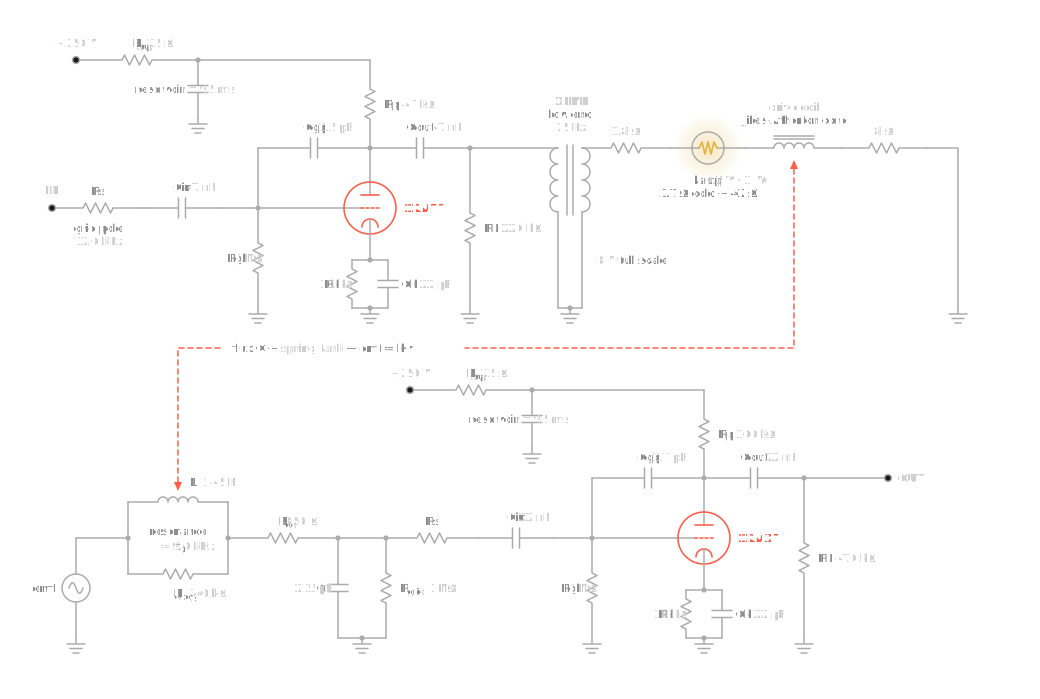
Every plugin starts from an actual schematic. We solve it at audio rate and then check it against the maths.

Circuit schematic of Torus's spring engine. A 12AT7 driver stage feeds a transformer, a lamp and an iron-cored coil. A magnetic link carries the signal through the spring tank to a pickup coil, which feeds a 12AX7 stage.

The numbers

0.00003 dB
Worst miss between the Chronos EQ and the maths it's built on. The test only fails at 0.1.
0.31%
Of one core, for a four band EQ at 48 kHz. Stack a bunch of them, your session won't notice.
0 samples
Of delay hiding in the feedback loops. They get solved in the same sample, like the circuit does it.
3.7 → 42 Ω
The lamp in Torus heats up as you drive it, same as the real bulb, and the drive sags with it.

The proof

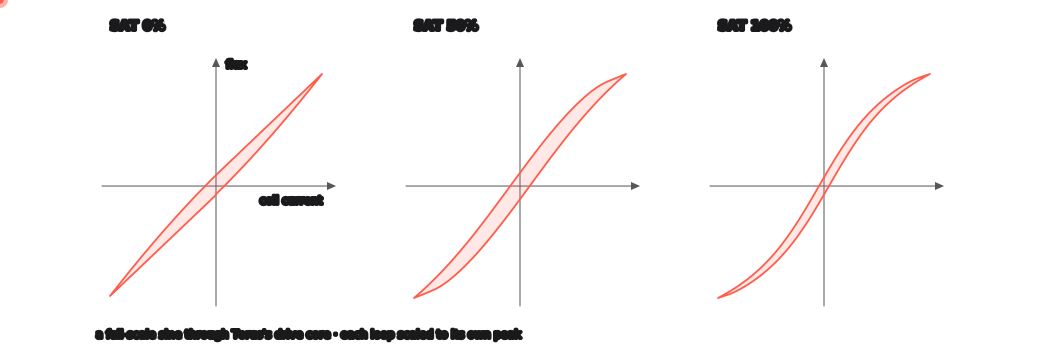
Coil current against flux for Torus's drive core at SAT 0, 50 and 100 percent. At 0 it is a straight line, and as SAT goes up the curve bends over and opens into a hysteresis loop.
What the SAT knob does inside Torus. At 0 the core is basically a wire. Turn it up and the iron bends over and opens into a loop, so the way back down isn't the way up.
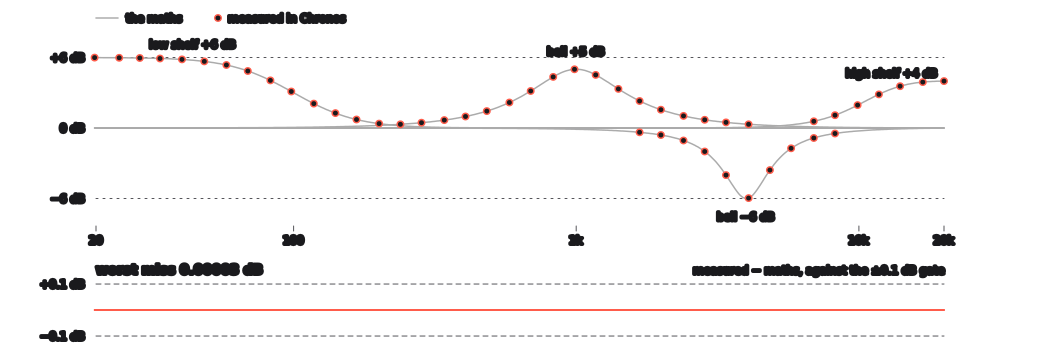
Four Chronos EQ bands. Measured points sit right on the lines from the maths, and the difference strip below stays flat at zero on a scale of plus or minus 0.1 dB. Worst miss 0.00003 dB.
Four bands through the Chronos EQ, measured bin by bin. The red rings are what actually came out. The full test runs 208 settings like this.
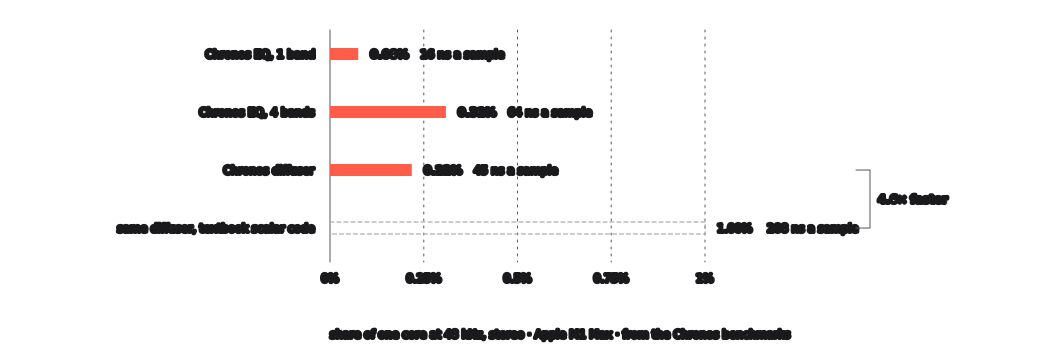
Share of one CPU core at 48 kHz: Chronos EQ one band 0.08 percent, four bands 0.31 percent, Chronos diffuser 0.22 percent, and the same diffuser written as textbook scalar code 1.00 percent, 4.6 times slower.
Straight out of the Chronos benchmarks on an M1 Max. The dashed bar is the same diffuser written the obvious way, for scale.

Both betas are free right now.

Grab one, throw it on a bus, and tell us what breaks.

macOS · Windows · Linux  /  AU · VST3 · Standalone

About the lab

Lissajous Labs makes audio plugins for music production.

Latest writing

So You Want to Make a Spring

The physics of a spring reverb, derived from the wire up: the helix equations, the mode they make, the transition frequency where the echoes turn around, and why a spring turns a click into a rising chirp.
All posts →

Questions?

Install help and beta details are in the FAQ. For anything else, get in touch.

Membership signupDD/MM/YYV. 001

Free and open to all. Members get first word on everything the Lab is working on: new plugins, betas, updates and DSP write-ups.

For producers, sound designers and tinkerers: tick the box to join the beta group and get early builds of upcoming plugins. Add a brief note about yourself when subscribing.

By signing up, you agree to our Privacy Policy and Terms and Conditions.